Meta’s Smart Glasses Move Closer to Mainstream Adoption
Meta AI Glasses enhance conversations in noisy places, Meta has taken another major step in transforming smart glasses from experimental gadgets into practical, everyday technology. With a newly introduced AI-powered audio feature, Meta AI Glasses can now enhance conversations in noisy environments by intelligently amplifying speech and reducing background noise.
The update targets one of the most common real-world problems people face daily: struggling to hear conversations clearly in busy places. From crowded restaurants and public transportation to offices and social events, background noise often disrupts communication. Meta’s latest enhancement aims to solve that problem—hands-free, discreetly, and without isolating users from their surroundings.
This development marks a meaningful shift in Meta’s wearable strategy, signaling that smart glasses are no longer just about capturing photos or streaming content, but about improving everyday human interaction.
What Are Meta AI Glasses?
Meta AI Glasses are smart eyewear developed in collaboration with well-known eyewear brands, most notably Ray-Ban. Designed to look like traditional glasses, they incorporate advanced hardware and artificial intelligence into a familiar form factor.
Core Capabilities
Before this update, Meta AI Glasses already offered:
-
Hands-free photo and video capture
-
Open-ear speakers for music and calls
-
Built-in microphones for voice commands
-
Integration with Meta AI voice assistant
-
Touch-sensitive controls on the frame
-
Livestreaming and content sharing
Despite these features, audio clarity in noisy environments remained a challenge—one that many wearable devices struggle to address effectively.
You May Also Read : Artificial Intelligence and Climate Change: Can AI Save the Planet?
The Everyday Problem: Hearing in Noisy Environments
Hearing conversations clearly in loud settings is not just an inconvenience—it can impact social confidence, productivity, and overall quality of life.
Why Noise Is Such a Big Issue
Modern environments are filled with competing sounds:
-
Restaurants with overlapping conversations
-
Traffic and public transport noise
-
Open-plan offices and co-working spaces
-
Events, parties, and social gatherings
Even people with no diagnosed hearing issues often experience listening fatigue, asking others to repeat themselves, or disengaging entirely from conversations.
Meta’s new feature directly targets this universal problem.

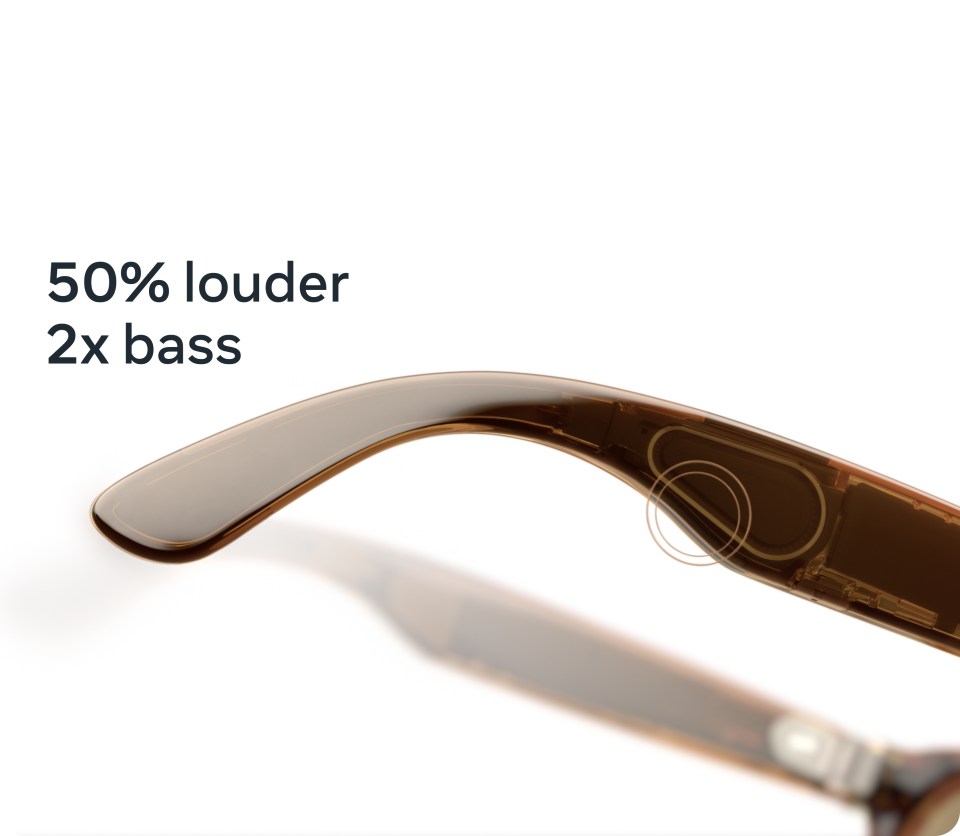

The New Conversation Enhancement Feature Explained
The newly added feature—commonly referred to as conversation enhancement—uses artificial intelligence to distinguish speech from background noise in real time. Meta Newsroom – AI Glasses Updates
How It Works
-
Multiple microphones capture environmental audio
-
AI models analyze sound patterns and frequencies
-
Human speech is identified and prioritized
-
Background noise is reduced, not eliminated
-
Enhanced audio is delivered through open-ear speakers
Unlike traditional noise cancellation, this approach maintains situational awareness, allowing users to remain conscious of their surroundings while focusing on conversations.
Why Meta Chose AI Over Traditional Noise Cancellation
Traditional noise-canceling technology works best for constant, predictable sounds such as engine noise or air conditioning hum. Human conversation, however, is dynamic and complex.
AI Advantages
-
Recognizes speech patterns rather than blocking sound
-
Adjusts in real time as environments change
-
Preserves important ambient sounds
-
Feels more natural during social interactions
This makes AI-driven audio processing far more suitable for conversational settings.
Real-World Use Cases
1. Restaurants and Cafés
Busy dining spaces are one of the hardest places to hear clearly. Plates clatter, music plays, and multiple conversations overlap. Meta AI Glasses can prioritize voices at your table, reducing the mental effort required to follow discussions.
2. Public Transportation
Buses, trains, and stations generate unpredictable noise. With conversation enhancement enabled, users can hear companions more clearly while still noticing announcements or safety cues.
3. Offices and Workspaces
Open-plan offices often lack acoustic privacy. The glasses can help professionals focus on discussions during meetings, brainstorming sessions, or casual workplace conversations.
4. Social Events and Networking
Large gatherings and events involve constant background chatter. The feature allows users to stay engaged without repeatedly asking others to speak louder or repeat themselves.


Accessibility Benefits Without Medical Labeling
One of the most important aspects of this update is its potential impact on accessibility.
Helping Without Replacing Hearing Aids
Meta is careful not to position the feature as a medical device. However, it can still benefit people with:
-
Mild hearing loss
-
Age-related hearing challenges
-
Auditory processing difficulties
For many users, the glasses may serve as an everyday support tool rather than a clinical solution.
Reducing Social Stigma
Because Meta AI Glasses look like normal eyewear, users can access hearing assistance without drawing attention. This is especially valuable for people who may feel uncomfortable wearing traditional hearing aids.
How Meta AI Glasses Compare to Other Technologies
Versus Noise-Canceling Headphones
-
Headphones block most environmental sound
-
Smart glasses maintain awareness
-
No discomfort from prolonged ear coverage
Versus Smartphone Apps
-
Always-on and hands-free
-
No need to unlock or hold a phone
-
More seamless social interaction
Versus Hearing Aids
-
Less customization and tuning
-
More affordable and stylish
-
Designed for general use, not diagnosis
Privacy and Audio Processing Concerns
Any device that processes audio raises privacy questions, especially when powered by AI.
Meta’s Approach
-
Audio processing occurs on-device
-
Conversations are not stored by default
-
No continuous recording without user input
-
Feature can be disabled in settings
As wearable AI becomes more common, user trust and transparency will be critical to adoption.
Battery Life and Performance Considerations
Running AI models on a wearable device requires power. While Meta has not reported major battery issues, conversation enhancement may increase energy consumption during prolonged use.
Possible Trade-Offs
-
Slightly reduced battery life
-
Performance may vary in extremely loud environments
-
Accuracy depends on sound direction and distance
Future software updates are expected to refine performance and efficiency.
Design: Why Glasses Matter as a Platform
Smart glasses offer unique advantages over other wearables.
Natural Placement
-
Positioned near ears and eyes
-
Ideal for audio and visual assistance
-
Less intrusive than headsets
Social Acceptance
Glasses are already part of everyday fashion. By embedding AI into a familiar object, Meta lowers resistance to adoption.
The Bigger Picture: AI and the Future of Wearables
Meta’s update reflects a larger trend in consumer technology.
From Features to Assistance
Early wearables focused on:
-
Step counting
-
Notifications
-
Media playback
AI-powered wearables focus on:
-
Context awareness
-
Real-time assistance
-
Enhancing human abilities
Conversation enhancement is a clear example of this evolution.
Competition and Industry Impact
Meta is not alone in exploring AI-driven audio enhancement, but its glasses-based approach stands out.
Why It Matters
-
Encourages competitors to innovate
-
Pushes smart glasses toward mainstream adoption
-
Expands the role of AI beyond screens
As more companies invest in smart eyewear, features like this may soon become standard.
Limitations and Challenges Ahead
Despite its promise, the feature is not without challenges.
Potential Issues
-
Difficulty isolating voices in extremely crowded spaces
-
Performance differences based on positioning
-
User learning curve for controls
However, these challenges are common for first-generation AI features and are likely to improve over time.
What This Means for Users
For everyday users, the update delivers:
-
Less listening fatigue
-
More comfortable social interactions
-
Improved confidence in noisy settings
-
A subtle but meaningful quality-of-life upgrade
Rather than demanding attention, the feature works quietly in the background.
What This Means for Meta
Strategically, the update strengthens Meta’s position in the wearable tech market.
Key Advantages
-
Focus on real-world utility
-
Accessibility-driven innovation
-
Fashion-first hardware approach
-
Gradual expansion of AI capabilities
This positions Meta AI Glasses as a long-term platform rather than a novelty product.
Conclusion
The new conversation-enhancing feature represents one of the most practical updates Meta AI Glasses have received so far. By addressing a common, everyday problem, Meta demonstrates how artificial intelligence can improve human communication in subtle but powerful ways.
Rather than isolating users with headphones or replacing medical devices, Meta’s solution blends naturally into daily life. If future updates continue in this direction, smart glasses may soon become as essential as smartphones or smartwatches.
For now, Meta AI Glasses are no longer just about capturing moments—they’re about helping users stay connected in them.
Pingback: Why Budget Smartphones Are Getting Better Than Flagships - Nxtainews